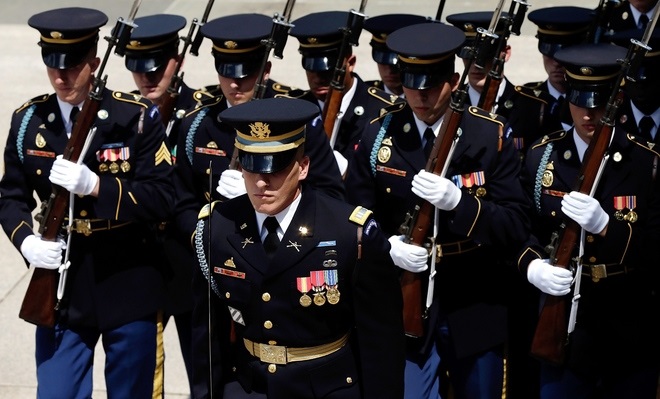
Hey, Esli, I’ve got a question. What’s the deal with the belt? I looked in AR670-1 a long time ago, and didn’t see a reference to it as a uniform item, nor guidance on when it was to be worn. Any info?
By
·
Hey, Esli, I’ve got a question. What’s the deal with the belt? I looked in AR670-1 a long time ago, and didn’t see a reference to it as a uniform item, nor guidance on when it was to be worn. Any info?
Hey, Esli, I’ve got a question. What’s the deal with the belt? I looked in AR670-1 a long time ago, and didn’t see a reference to it as a uniform item, nor guidance on when it was to be worn. Any info?
Tags:
Authorization is covered in the AR in chapter 20-11.b. Also CTA 50-900 allows use of special equipment in ceremonial units. As I understand it, the belt comes from the belt and waist plate used to hang the bayonet, although I don’t remember seeing scabbards on tomb guards. Old Guard is specially authorized duty with bayonets fixed.
LikeLike
The above is correct; authorization for ceremonial purposes. Also worn when saber/sword are (rarely) worn with blues by anyone other than TOG. Little known fact: when I was there, the standard was to wear your belt 3″ shorter than your waist size to create that manly “V” shape. When I was on the drill team, we did not wear it tight as raising our hands over our head would then make the blouse look pretty crappy. Not sure on Tomb Guards but drill team did not use bayonet scabbards but all other Soldiers did, as most ceremonies feature “Sound Fix Bayonets” done to a drum-beat. TOG was authorized (I believe) in 1922 by the War Department as the only unit authorized to pass in review with bayonets fixed, as a result of a bayonet charge during the Mexican American war. Without googling, I think it was at Cerro Gordo. Bayonet in scabbard, scabbard hangs from “frog.” Frog on blues belt. Belt on blues….
LikeLike
My late father served with the Old Guard as a platoon first Sarg. interestingly enough after a stint in Germany with the 10th SFG.
LikeLike
 XBradTC
Leave a comment